
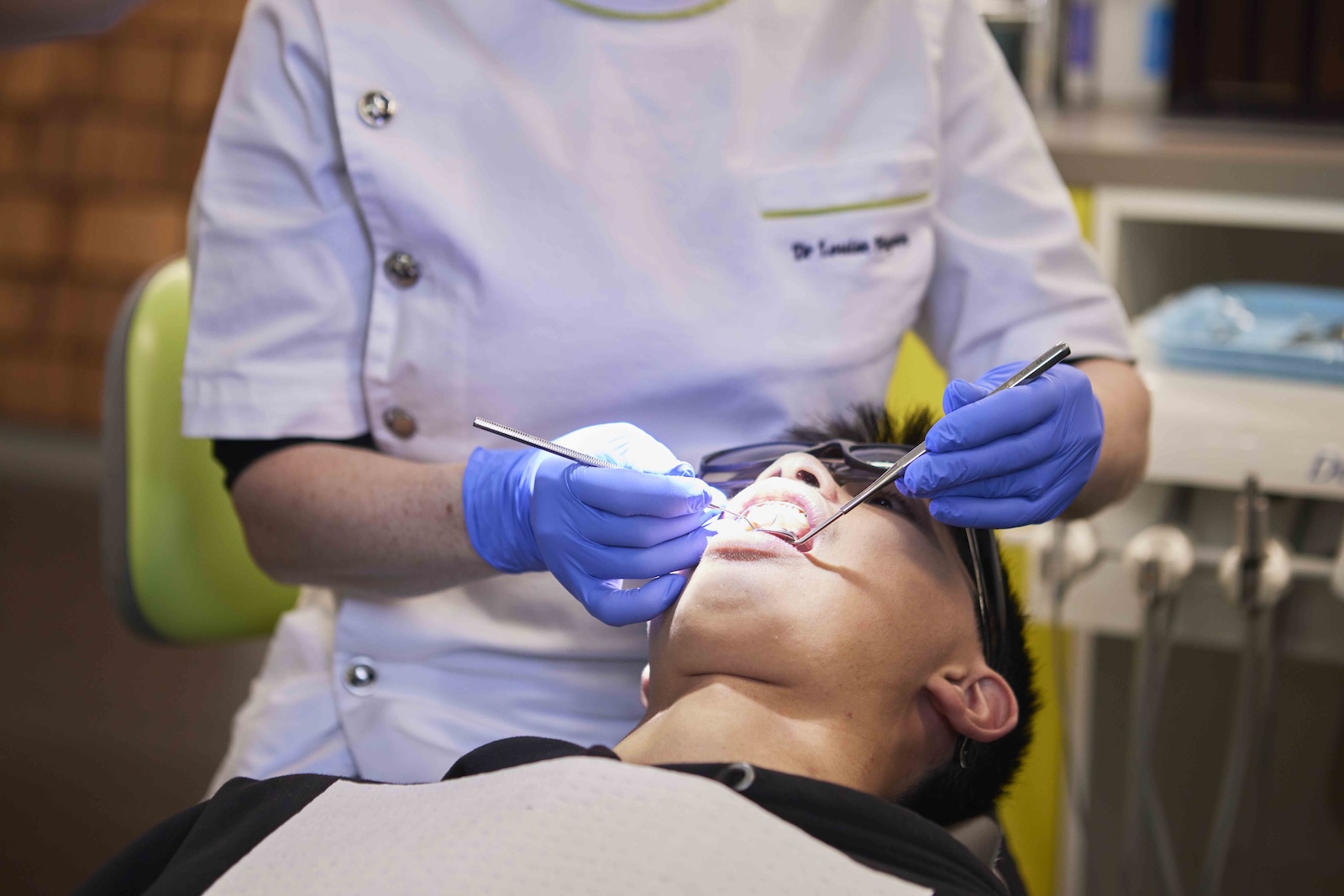
If interproximal reduction, or IPR, is part of your orthodontic treatment plan, you might be wondering exactly what it involves and why your orthodontist has recommended it.
IPR is an orthodontic technique that involves removing a very small, carefully measured amount of enamel from between selected teeth. It may be used during braces or clear aligner treatment to create space for planned tooth movements or, in some cases, help manage small triangular spaces between the teeth known as black triangles.
IPR isn’t needed for every patient. Your orthodontic team will explain if it’s recommended as part of your individual treatment plan, why it’s being considered and what the procedure involves.
Understanding Interproximal Reduction (IPR)
Interproximal reduction involves carefully removing a small amount of enamel (less than 1mm) from the sides of selected teeth. This creates a small amount of additional space that your orthodontist can incorporate into your treatment plan.
Depending on your individual orthodontic needs, IPR may be recommended with braces or clear aligners.
The amount and location of IPR are planned in advance as part of your orthodontic treatment. Only selected teeth are treated, and the amount of enamel removed is carefully measured.
Why Is IPR Used During Orthodontic Treatment?
Your orthodontist may recommend IPR when a small amount of additional space is needed to achieve the planned tooth movements.
Depending on your treatment, IPR may be used to:
- Create space when teeth are crowded
- Help manage the shape and contact points of neighbouring teeth
- Support planned tooth movements with braces or clear aligners
- Help reduce the appearance of some black triangles between teeth
Whether IPR is appropriate depends on factors such as your tooth shape, enamel, crowding and overall treatment plan.
What Are Black Triangles Between Teeth?
Black triangles are small triangular spaces that can sometimes appear between neighbouring teeth near the gumline. The clinical term for these spaces is open gingival embrasures.
They can occur for several reasons, including the shape and position of the teeth and changes to the gum tissue.
In some orthodontic cases, aligning triangular-shaped teeth can make these spaces more noticeable because the wider part of each tooth comes into contact while a small space remains closer to the gumline.
Can IPR Help With Black Triangles?
In some cases, IPR may be used to slightly reshape the sides of selected teeth. This can change where neighbouring teeth make contact and may allow your orthodontist to bring the teeth closer together as part of the planned orthodontic movements.
IPR isn’t appropriate for every black triangle, and it may not completely close the space. Your orthodontist can assess the cause of the black triangle and explain whether IPR may be appropriate in your individual case.
How Is IPR Performed?
IPR can be performed using different orthodontic instruments, including fine abrasive strips or discs that allow the clinician to remove a carefully measured amount of enamel between selected teeth.
The technique used will depend on the amount of space required, the teeth being treated and your individual treatment plan.
Your Specialist Orthodontist or Oral Health Therapist will explain what’s planned before the procedure begins.
Does IPR Hurt?
IPR involves gentle polishing of enamel where the teeth contact to help create space for the teeth to move into the desired position. Only a small amount of enamel is removed.
To complete the polishing, we use a combination of diamond strips, or your orthodontist sometimes will use a disc to complete the polishing – these are safe and measured to conform to the natural shape of the tooth. Most people do not experience any pain or sensitivity during or after IPR, unless your teeth are already prone to sensitivity during orthodontic treatment, but this usually subsides within the day.
Your Oral Health Therapist or orthodontist will explain what to expect before starting and let them know if you feel uncomfortable at any stage.
Is IPR Permanent?
Yes. IPR permanently removes a small amount of enamel, so it is an irreversible procedure.
For this reason, the amount and location of IPR are carefully planned before it is performed. If IPR is recommended as part of your treatment, your clinical team will explain why it’s being considered and discuss the procedure with you beforehand.
Can You Have IPR With Braces or Clear Aligners?
IPR may form part of your treatment plan with braces or clear aligner treatment depending on your teeth, bite and individual treatment plan. Your orthodontist will discuss this with you and gain your consent before planning any IPR in your treatment.
Is IPR Right for Everyone?
IPR isn’t part of every orthodontic treatment plan. Whether it’s recommended will depend on your individual teeth, bite and the tooth movements your orthodontist has planned.
If IPR is recommended during your treatment at L&L Orthodontics, our clinical team will explain why it’s needed, where it will be performed and what to expect before proceeding.
If you’re considering orthodontic treatment, you can book a consultation with one of our Specialist Orthodontists at our Melbourne CBD or Templestowe clinic to discuss the treatment options that may be suitable for you.
Individual treatment needs and experiences vary. A clinical assessment is required to determine whether IPR or another orthodontic technique is appropriate for you.