
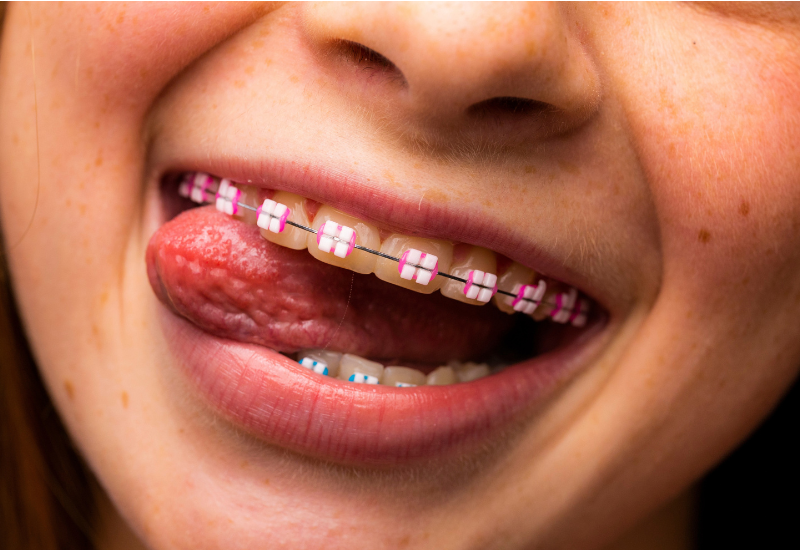
If you’re considering braces for yourself or your child, you may have come across both traditional braces and newer digitally planned options such as LightForce™ 3D Braces.
Both are fixed orthodontic appliances designed to gradually move teeth into their planned positions, but there are some important differences in how the brackets are made and how treatment is planned.
At L&L Orthodontics, our Specialist Orthodontists work with a range of braces options and recommend treatment based on each patient’s teeth, bite, treatment needs and preferences.
So, how do LightForce™ 3D Braces compare with traditional braces? Here’s what you need to know.
What Are Traditional Metal Braces?
Traditional metal braces have been used in orthodontics for many years and remain an established treatment option for a wide range of orthodontic concerns.
They use a system of brackets attached to the teeth and an orthodontic wire to apply controlled forces that gradually move the teeth.
Traditional brackets are manufactured in standard shapes and sizes rather than being individually 3D printed for each patient. Your orthodontist positions the brackets on your teeth according to your individual treatment plan and makes adjustments throughout treatment as your teeth move.
Benefits of Traditional Braces
Traditional braces can:
- Treat a wide range of orthodontic concerns
- Be used for children, teenagers and adults when clinically appropriate
- Provide your orthodontist with control over tooth movement throughout treatment
- Offer a well-established approach to orthodontic treatment
Traditional braces are not “outdated”. They remain an appropriate and excellent treatment option for many patients. What has changed is the technology now available to customise and digitally plan some types of braces treatment.
What Are LightForce™ 3D Braces?
LightForce™ 3D Braces use digital treatment planning and 3D-printing technology to create brackets customised for an individual patient’s treatment plan.
Instead of selecting brackets from a range of standard, pre-manufactured shapes, your Specialist Orthodontist digitally plans the position of each tooth. LightForce™ software is then used to design brackets and placement guides based on that treatment plan.
The brackets are available in a translucent ceramic material or in a low-profile metal.
LightForce™ Braces vs Traditional Braces: Key Differences
While both systems work by applying controlled forces to move teeth, the main difference is the level of customisation involved in the brackets and treatment-planning process.
-
Customised vs standard brackets
Traditional braces generally use pre-manufactured brackets that are available in standard prescriptions, shapes and sizes. Your orthodontist determines where each bracket should be positioned on your teeth.
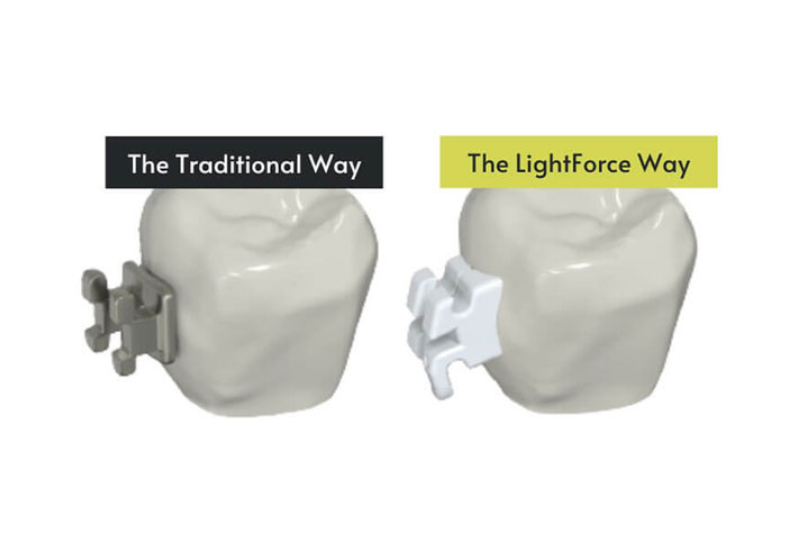
LightForce™ brackets are digitally designed and 3D printed for the individual patient based on their orthodontist’s treatment plan.
This allows the bracket design and placement to be incorporated into the digital planning process before the braces are bonded.
-
Digital treatment planning
Digital technology is increasingly used throughout modern orthodontics, including with both braces and clear aligners.
With LightForce™, digital planning is central to the treatment process. Your orthodontist can plan the intended tooth positions and bracket placement digitally before your braces are fitted.
It’s important to remember that the technology does not make treatment decisions on its own. Your Specialist Orthodontist is responsible for your diagnosis, treatment plan and ongoing clinical care.
-
Appearance
One of the most noticeable differences between LightForce™ and traditional metal braces is their appearance.
Traditional metal braces use visible stainless-steel brackets. LightForce™ brackets are made from a translucent, tooth-coloured ceramic material designed to be less noticeable against the teeth. A metal option is also available.
For teenagers and adults who would prefer a more discreet fixed-braces option, this may be an important consideration.
-
Bracket placement
With traditional braces, your orthodontist positions each bracket according to the treatment plan and the bracket system being used.
With LightForce™, custom placement trays are created as part of the digital workflow. These help transfer the digitally planned bracket positions onto the teeth during the bonding appointment.
The goal is to reproduce the orthodontist’s planned bracket positioning as accurately as possible.
-
Cost
LightForce™ 3D Braces are individually designed and 3D printed based on your teeth and your orthodontist’s treatment plan. This additional customisation and digital planning is reflected in the cost of treatment.
Traditional metal braces use standard, pre-manufactured brackets and are generally available at a lower cost than LightForce™ braces at L&L Orthodontics. Your treatment options and associated costs will be discussed with you during your orthodontic consultation.
Are LightForce™ Braces More Comfortable Than Traditional Braces?
Comfort is subjective, so it isn’t possible to say that one type of braces will be more comfortable for every patient.
With any fixed braces, it is normal to experience some tenderness or pressure, particularly after braces are first fitted or following certain adjustments. Brackets and wires can also temporarily irritate the cheeks or lips while your mouth adapts.
LightForce™ brackets have a customised design, but your individual experience will depend on your treatment and how your mouth responds to braces.
Are LightForce™ Braces Faster Than Traditional Braces?
There is no single treatment time that applies to either LightForce™ or traditional braces.
LightForce™’s digital workflow allows your orthodontist to customise bracket design and placement according to the planned tooth movements. This may lead to fewer in-person appointments, meaning less time out of work or school.
Orthodontic treatment still relies on biological tooth movement, and treatment times vary considerably between patients.
After an orthodontic assessment, your Specialist Orthodontist can discuss the anticipated treatment timeframe based on your individual needs.
Are LightForce™ Braces Better Than Traditional Braces?
At L&L Orthodontics, LightForce™ 3D Braces are one of the braces options that we may recommend because they allow treatment to be customised to the individual patient.
Unlike traditional metal braces, which use standard pre-manufactured brackets, LightForce™ brackets are individually designed and 3D printed based on each patient’s teeth and their orthodontist’s treatment plan. The customised bracket base is designed to closely match the individual tooth surface, while digital planning allows the orthodontist to plan bracket positioning and intended tooth movements before the braces are fitted.
Traditional metal braces remain an established orthodontic treatment option and may be appropriate for a wide range of patients. They are often a more cost-effective option, which may be an important consideration when choosing treatment.
There isn’t one braces system that is right for everyone. Your Specialist Orthodontist will assess your teeth and bite, discuss the options that may be suitable for you and explain the differences in treatment approach and cost before you decide how to proceed.
Choosing the Right Braces for You
Modern orthodontics gives patients more treatment options than ever before but having more choice can also make it difficult to know where to start.
At L&L Orthodontics, our Specialist Orthodontists assess your teeth, bite and jaws before recommending an appropriate treatment approach. If more than one option is suitable, we can explain the differences so you can make an informed decision based on your needs and preferences.
Whether that involves LightForce™ 3D Braces, traditional braces or another orthodontic treatment will depend on your individual assessment.
Book an orthodontic consultation to discuss your treatment options with a Specialist Orthodontist at our Melbourne CBD or Templestowe clinic.
Individual treatment needs, experiences and treatment times vary. An orthodontic consultation and clinical assessment are required to determine suitable treatment options. Our orthodontists will advise whether treatment is suitable for you.