
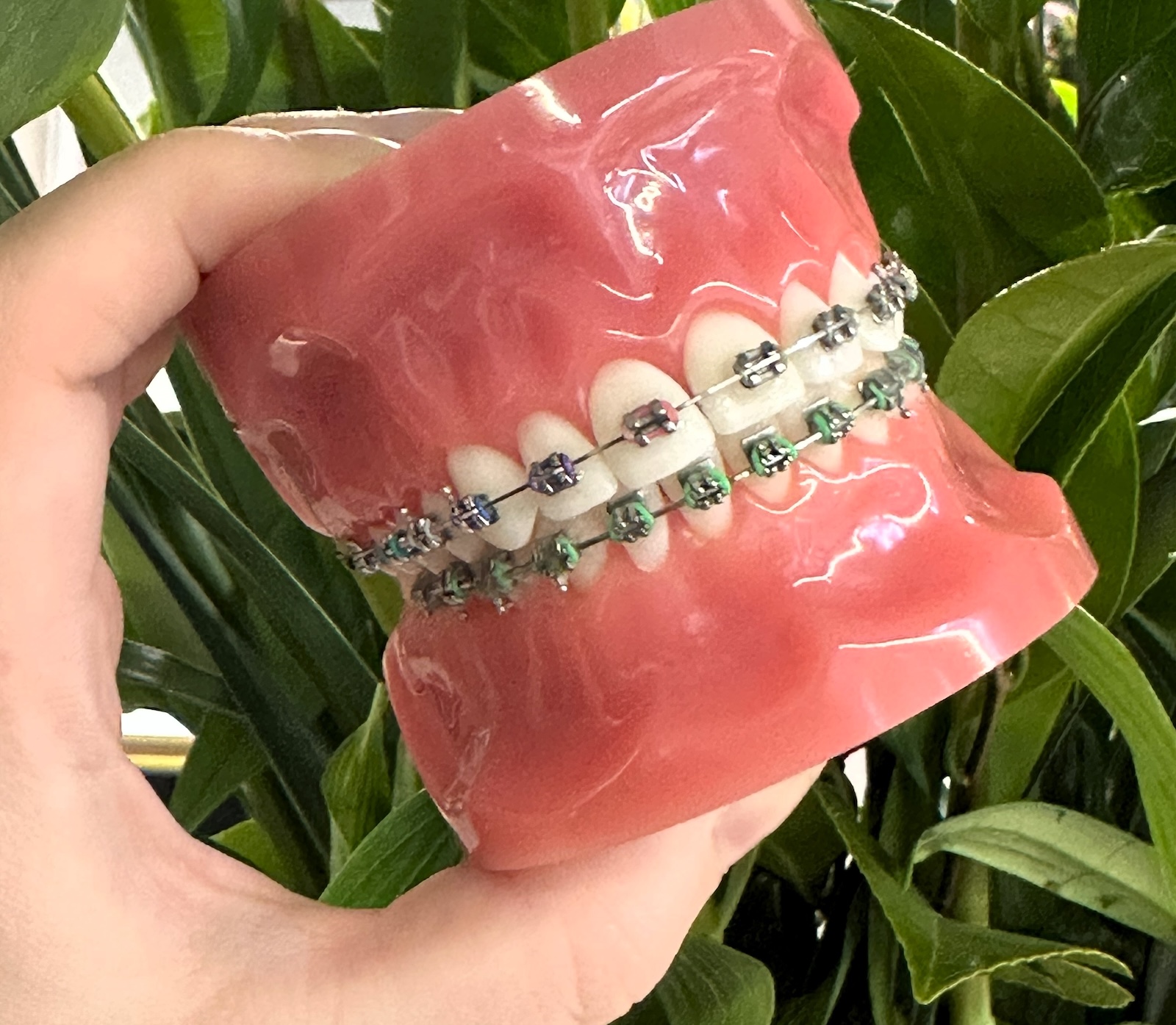
Metal braces are one of the most established types of orthodontic treatment. They use brackets and wires to apply controlled forces to the teeth, gradually moving them towards their planned positions.
Traditional metal braces can be used to treat a range of orthodontic concerns, including crowding, spacing and some bite problems, depending on the individual patient.
If you’re considering metal braces for yourself or your child, here’s how they work, what treatment involves and how they compare with other orthodontic options.
What Are Metal Braces Made Of?
Metal braces are a type of fixed orthodontic appliance used to straighten teeth, correct bite issues, and improve overall dental health.
They consist of three main parts:
- Brackets – small stainless-steel squares bonded to the front of each tooth
- Archwire – a thin wire that connects the brackets and applies gentle pressure
- Modules – rubber rings that hold the wire in place and can be changed to fun colours at each visit
Together, these parts gradually shift your teeth into alignment under the guidance of your Specialist Orthodontist.
How Do Metal Braces Work?
Metal braces apply controlled forces to the teeth through a system of brackets and archwires. These forces gradually encourage the teeth to move towards the positions planned by your orthodontist.
As your teeth move, the bone and supporting tissues around them gradually adapt. Your orthodontist monitors this movement throughout treatment and makes adjustments when needed based on your individual treatment plan.
What Are The Benefits of Metal Braces?
Traditional metal braces remain an established treatment option for children, teenagers and adults. Depending on your individual orthodontic needs, some reasons you may consider them include:
- Versatility: Metal braces can be used to manage a wide range of tooth and bite concerns.
- Fixed treatment: Because the braces remain attached to your teeth, you don’t need to remember to insert and remove them throughout the day.
- No custom bracket manufacturing: Traditional brackets come in standard shapes and sizes, unlike individually manufactured custom bracket systems.
- Personalisation: Coloured ligatures can give patients the option to change the appearance of their braces at appointments.
- Cost: At L&L Orthodontics, traditional metal braces are generally a lower-cost option than customised LightForce 3D Braces.
Metal braces are a great option for teens who want reliable results with the fun of colourful bands, as well as adults with more complex bite or alignment issues.
Are Metal Braces Suitable for Everyone?
Metal braces can be suitable for many children, teenagers and adults, but they aren’t automatically the right treatment for every patient.
Your orthodontist will consider your teeth, bite, oral health, age and individual treatment needs before recommending an orthodontic treatment. If more than one option may be suitable, they can explain the differences so you can make an informed decision.
Do Metal Braces Hurt?
You may experience some tenderness or pressure when your braces are first fitted or after certain adjustments. Your cheeks and lips may also take some time to adjust to the brackets and wires. When you get your metal braces fitted, we’ll advise you how to manage any initial discomfort. General tips include using orthodontic wax to manage any sharp edges or wires and eating softer foods while your teeth adjust.
Experiences vary between patients. If you’re experiencing persistent pain or something doesn’t feel right, contact your orthodontic team for advice.
How Long Do You Need Metal Braces?
There isn’t one treatment timeframe for metal braces. How long you need to wear them depends on factors such as the type and complexity of tooth movement required and your individual response to treatment.
After assessing your teeth and bite in your consultation, your Specialist Orthodontist can discuss the anticipated timeframe for your individual treatment plan.
What’s the Difference Between Metal Braces and LightForce™ 3D Braces?
Both are fixed braces, but the main difference is how the brackets are made and how treatment is planned. Traditional metal braces use standard, pre-manufactured brackets, while LightForce™ brackets are individually designed and 3D printed based on your orthodontist’s digital treatment plan.
You can read our full LightForce™ 3D Braces vs Traditional Braces guide for a detailed comparison.
Are Metal Braces Right For You?
If you’re considering braces for yourself or your child, an orthodontic consultation is the best place to start. Our Specialist Orthodontists will assess your teeth and bite, discuss your treatment needs and explain which orthodontic options may be suitable for you.
Book an orthodontic consultation at our Melbourne CBD or Templestowe clinic.
Consultation required to assess eligibility. Our orthodontists will advise whether treatment is suitable for you.