
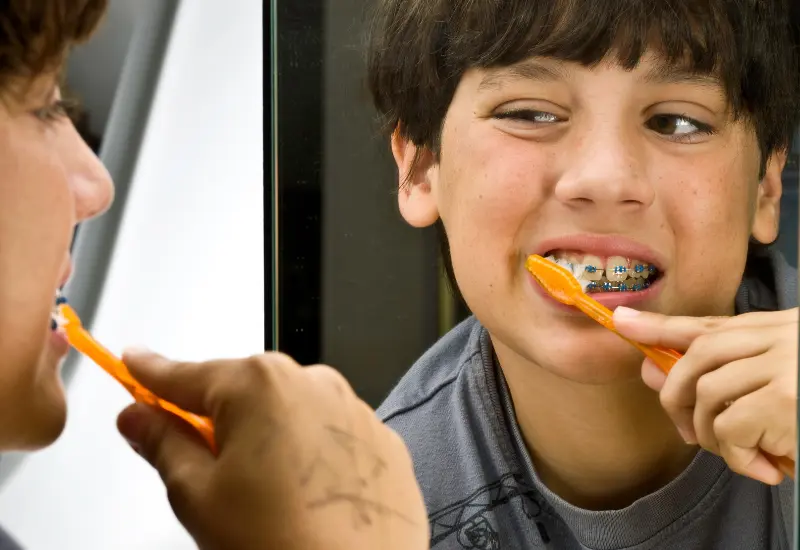
Good oral hygiene is always important, but it needs a little extra attention during orthodontic treatment. Braces can create additional areas where food and plaque collect, while clear aligners need to be kept clean alongside your teeth and gums.
The good news is that looking after your teeth during treatment doesn’t need to be complicated. With the right routine, techniques and tools, you can help keep your teeth and gums healthy throughout your orthodontic treatment.
In this guide, we cover how to brush and floss with braces or clear aligners, what products can help, the oral health problems to look out for and when to see your dentist or orthodontic team.
Why Is Oral Hygiene So Important?
Plaque is a sticky film of bacteria that naturally builds up on your teeth. During orthodontic treatment, brackets, wires and clear aligner attachments can create additional areas for plaque and food to collect. Clear aligners can also hold plaque against the teeth if your teeth or aligners aren’t cleaned properly.
Without effective brushing and cleaning between your teeth, plaque build-up can increase the risk of:
- Tooth decay
- Gum inflammation and gum disease
- Enamel demineralisation, which can appear as white marks on the teeth
- Bad breath
Maintaining good oral hygiene helps keep your teeth and gums healthy while your orthodontic treatment progresses.
How to Keep Your Teeth Clean With Clear Aligners
How to Keep Your Teeth Clean With Braces
How Your Diet Affects Oral Health During Orthodontic Treatment
What you eat and drink can make a difference to your oral health during orthodontic treatment. Frequently consuming sugary or acidic foods and drinks can increase the risk of tooth decay and enamel demineralisation, particularly when plaque isn’t being removed effectively from around brackets, wires or attachments.
You don’t need to completely avoid sugar, but limiting how often you have sugary or acidic foods and drinks can help protect your teeth. Water is the best choice for everyday hydration, alongside a balanced diet and a consistent brushing and flossing routine.
If you’re wearing braces, you’ll also need to take a little extra care with hard, sticky and chewy foods, as these can damage brackets and wires. Read our guide to what to eat with braces for braces-friendly food ideas and tips on foods that may need to be avoided or modified.
Your Daily Oral Hygiene Routine During Orthodontic Treatment
How Often Should You Brush Your Teeth During Orthodontic Treatment?
Good brushing habits are especially important during orthodontic treatment, as food and plaque can collect around brackets, wires and attachments. Brush your teeth for 2 minutes at least twice a day using fluoride toothpaste, taking extra care to clean along the gumline and around your orthodontic appliance.
If you wear braces, you may also find it helpful to brush after meals when possible to remove food caught around your brackets and wires. Take your time and make sure you’re reaching above, below and around each bracket rather than simply brushing over them.
How Do You Floss With Braces?
Flossing with braces can take a little more time, but there are several tools that can make cleaning between your teeth easier. Floss threaders and super floss can help you guide floss underneath your wire, while interdental brushes can be useful for cleaning around brackets and between teeth.
A water flosser can also be a helpful addition to your routine for removing food and plaque from hard-to-reach areas. If you’re unsure which tools to use or how to floss effectively with your braces, ask our team at your next appointment. We can demonstrate different techniques and help you find an approach that works for you.
Cleaning Between Your Teeth With Clear Aligners
One benefit of removable clear aligners is that you can take them out to brush and floss your teeth as usual. Clean between your teeth every day, paying particular attention to areas where food or plaque may collect.
Before putting your aligners back in, make sure your teeth are clean and your aligners have been cleaned as recommended. This helps prevent food and plaque from becoming trapped between your teeth and aligners.
FAQs
How often should I brush my teeth with braces?
We recommend brushing twice daily for 2 minutes at a time. You may also find it helpful to brush after meals to dislodge any food particles stuck in your brackets or wires.
Can you use an electric toothbrush with braces?
Yes, an electric toothbrush can generally be used with braces. Your orthodontic team can advise you on brushing techniques for your appliance.
How do you floss with braces?
Floss threaders, orthodontic floss, interdental brushes and water flossers can make cleaning around brackets and wires easier.
Do I still need dental cleans while I have braces?
Yes. Continue attending your regular dentist for check-ups and professional cleans as recommended.
What happens if you don’t brush properly with braces?
Plaque can accumulate around the teeth and brackets, increasing the risk of tooth decay, gum inflammation and enamel demineralisation.
Need Help With Your Oral Hygiene Routine?
Keeping your teeth and gums clean can take a little more time during orthodontic treatment, particularly when you’re getting used to a new appliance. Once you’ve found a routine and tools that work for you, it generally becomes much easier.
If you’re an L&L Orthodontics patient and you’re finding it difficult to clean around your braces or have questions about caring for your clear aligners, speak with our team at your next appointment or reach out through the Dental Monitoring app. We’re happy to demonstrate techniques and recommend products that may help.